






Cheryl Stixx
Wrestlers
-
Joined
-
Last visited
-
Cheryl Stixx Has Nothing to Prove (And Everything to Feel) Written by Dominique Sisley for DAZED I’m sure you’ve seen the compilations. Cheryl Stixx crying on X — mascara running, chin trembling, speaking like every word is being pulled straight from an exposed nerve. Or the fan edits: slow-motion entrance, her now-iconic theme “Vegas Bitch” rattling through an arena while she walks like she owns both the room and the ruin. The internet loves her in extremes — deified or devastated, nothing in between. What it rarely captures is the in-between. When Stixx answers the phone, she sounds disarmingly normal. Warm. Slightly breathless. “Wait, am I echoing? I feel like I’m echoing. That’s dramatic,” she says, half-laughing. There’s no arena reverb, no swelling soundtrack. Just a woman in her own space, trying to articulate the mess of being perceived at scale. “It’s funny,” she says. “People think I’m either about to conquer something or about to collapse. And sometimes I am. But mostly I’m just… living.” Her sophomore album, The Trial of Venus, doesn’t retreat from the spotlight — it reframes it. Where her debut was excavation — digging through her past, tracing the making of Cheryl Stixx as both myth and armour — this record is about now. About what it costs to keep becoming in public. If the first album constructed the spectacle, this one steps outside of it. Desire, jealousy, faith, ego, devotion — nothing is arranged into neat empowerment arcs. There’s no origin story to hide behind. It’s present-tense, reactive, sometimes uncomfortably exposed. Not aspirational. Not resolved. Just intimate in a way that feels almost invasive. “I didn’t want to sound strong,” she says. “I wanted to sound real. There’s a difference.” Strength, in Cheryl’s world, is usually assumed. She main-evented Wrestlelution months ago — a milestone that lives online now as highlight reels and slow-motion GIFs — but she speaks about it like someone describing a fever dream. “I don’t even remember the applause,” she says. “I remember the quiet right before. That split second where you’re like, ‘Oh. This is mine. I can’t run from it.’ That’s the part that sticks.” If the internet prefers her mythologised, The Trial of Venus feels like a deliberate demystification. It’s sticky with feeling. It doesn’t resolve neatly. On first listen, it sounds like a woman in love. On second listen, it sounds like a woman interrogating why. By the third, it’s something closer to a confession booth with no priest on the other side. “I feel everything at a ten,” she says. “Which is beautiful and exhausting. I’ll wake up and be like, okay, today I’m soft and spiritual. By 2PM I’m jealous of something I made up in my own head. By 6PM I’m writing poetry about it. It’s a lot.” There’s no attempt to sand that down. If anything, she leans into it. “I used to think I had to pick a lane. Like, are you the good girl? Are you the sexy one? Are you the serious athlete? Are you the emotional wreck? And I’m like… unfortunately, I am all of it.” On “Boys Call It Hot,” she plays with that tension — the way female desire is consumed, renamed, reframed depending on who’s watching. It’s raw, sharp, a little unhinged. “I didn’t sit down and go, ‘Today I’m coming out,’” she says, rolling her eyes at the idea of branding vulnerability. “I just wrote what felt true. I’ve loved people in complicated ways. I’ve wanted things I was told not to want. That’s not scandalous. That’s being alive.” She grew up religious — church on Sundays, doctrine that settled deep in the bones — but she resists the narrative that faith and liberation are opposites. “I still believe,” she says plainly. “I just don’t believe in shrinking. Jesus was a rebel. He was flipping tables and hanging out with sex workers. If anything, I’m very on brand!” There’s a pause, then she laughs. “I’m sure someone will clip that out of context.” Her relationship to femininity is less aesthetic, more existential. It’s not about reclaiming softness so much as refusing to apologise for its volatility. “Sometimes femininity is nurturing and calm,” she says. “Sometimes it’s territorial. Sometimes it’s horny. Sometimes it’s petty. I’m not interested in pretending it’s always enlightened.” She catches herself. “God, I sound insane.” You don’t, I tell her. “No, I do,” she insists, amused. “But I’m okay with that now. I’d rather be intense than numb.” Intensity bleeds into everything — including the way she speaks about Quartz. There’s no grandstanding when his name comes up, no storyline gloss. Just care. “I genuinely want him to do well,” she says. “And I don’t mean titles. I don’t mean applause. I mean like… I want him to sleep at night. I want him to feel steady in himself. We get so trapped in thinking success is the scoreboard. It’s not. It’s whether you can look at yourself when it’s quiet.” It’s the kind of answer that feels too soft for the spectacle they both inhabit. And maybe that’s the point. “I fall flat all the time,” she continues. “Publicly. Loudly. I spiral. I doubt. I overthink. I’m a hot mess. But I don’t disappear. That’s my thing. I stay. Even when it’s embarrassing. Especially when it’s embarrassing.” There’s something defiant in that — not the glossy empowerment of “thriving,” but the more stubborn act of remaining visible while imperfect. The album mirrors that philosophy. It doesn’t present growth as linear. It doesn’t punish her for contradiction. It just lets her be contradictory. “I’m a sad girl,” she says casually. “But I’m also very horny. And very hopeful. And overly romantic. And dramatic. And stubborn. And probably annoying. That’s the cocktail.” Does she ever wish she felt less? “Sometimes,” she admits. “It would be easier. I see people who seem so contained, so composed. I’m like, wow, what’s that like? But then I think… if I didn’t feel this much, I wouldn’t make anything worth listening to. I wouldn’t walk into rooms the way I do. I wouldn’t love the way I love.” For someone so often framed as provocative, stirring the pot seems less about chaos and more about honesty. “I don’t wake up trying to shock people,” she says. “I wake up trying to not lie. If that shakes something, good. Maybe it needed shaking.” The Cheryl of fan edits — bathed in firelight, strutting to “Vegas Bitch,” eyes sharp enough to cut glass — is still there. But so is the one who overthinks text messages, who cries in the car, who questions herself at 3AM and still shows up the next day. “I’m not trying to be iconic,” she says. “I’m trying to be honest. If that ends up iconic, cool. If it ends up messy, also cool.” Before we hang up, she circles back to something she said earlier — about being perceived in extremes. “I think people are scared of women who feel this much,” she says. “We’re easier to digest when we’re either broken or perfect. But the middle? The complicated part? That’s where I live.” And maybe that’s the real spectacle. Not the pyro. Not the entrance music. Not the milestones archived online. Just a woman refusing to edit herself into something quieter. “I finally like who I am,” she says, almost surprised by it. “And she’s a lot.” She laughs again — full, uncontained. And you believe her.


 The Trial of Venus is finally here! Hi everyone! My StixxStars, and the whole OCW Galaxy. Today, I’m here to share something deeply personal and incredibly special to me: The Trial of Venus. This album is a package of everything that went down in my life this crazy year — the year I returned to OCW, the year I fully jumped back in after so many years away. It’s an honest reflection of the journey so far: the monsters I faced, my inner demons, my triumphs, my self-discovery. If Cherilyn was about the girl before Cheryl Stixx and how she came to be, The Trial of Venus is about where I stand now. I allowed myself to feel fully. I allowed myself to be petty, angry, fragile, intense, horny, sad, insecure, jealous — all of it. If I started this project slightly tinted with self-pity, I’m grateful I finished it with the clarity of my freedom — and with the grace to not only forgive myself, but everything that ever tried to hold me back. Through it, I saw that I am pretty when I panic — and that it can be a trap. I faced my fear of relapsing and that constant hunger for the next rush. I saw myself standing at crossroads, begging for things that might never be, but I also earned the pride of refusing to bend just to be chosen — ever. And speaking of pride, I think it’s safe to say I’ve never been so open about my desires, or so loud about the joy of being exactly who I am. I faced the reality of wanting to be perceived. Respected. Heard. And if I had to build my own table just to have a seat at it — then okay. I can do that. I allowed myself to be proud of my accomplishments, of my legacy. I am STILL that girl. I reflected on the nonsensical truth that sometimes things just are what they are — a wingbeat and life’s cray-cray. I got angry. I yelled about jealousy over things and people that weren’t even mine. I wondered which Cheryl is waiting for me behind doors I never got to open — and if I never open them, are they still me? Am I still worth it? I dressed myself in girlhood and female power — UGH — loads of it. I faced every omen and its consequences. I got horny. I let it out. And finally, I got my verdict: Every woman is my religion. I am divine. We are. I hope you experience this journey as deeply as I lived it. It’s been messy, euphoric, painful, empowering — and absolutely worth it. Thank you for being here. Thank you for witnessing this chapter. Thank you for allowing me to grow in front of you. I love you. Stixx up! Stream The Trial of Venus NOW! YouTube: Album Cover: Tracklist: 1. The Trial of Venus Runtime: 4:07 2. Pretty When I Panic Runtime: 3:35 3. Crashing for Fun Runtime: 4:44 4. Crimson Cross Runtime: 3:36 5. Pick Me Not Runtime: 3:22 6. Boys Call it Hot Runtime: 3:34 7. A Sit at the Table Runtime: 5:58 08. Still That Girl Runtime: 3:34 09. Butterfly Logic Runtime: 2:29 10. It’s Perfectly Fine! Runtime: 4:20 11. The Door Runtime: 3:19 12. Girlette Runtime: 3:39 13. Omen Runtime: 5:03 14. Soft Power Runtime: 3:48 15. The Verdict Runtime: 3:48
 The Trial of Venus By Brittany Spanos With her first single from her sophomore album, Cheryl Stixx turns public scrutiny into art — confronting femininity, power, and the cost of being seen. Cheryl Stixx doesn’t describe her latest era as a reinvention. There’s no tidy narrative about rebirth or redemption, no polished mythology about starting over. Instead, she keeps returning to honesty — sometimes plainly, sometimes with a laugh, sometimes with the clarity that comes from being publicly misunderstood for too long. “I thought I was writing about myself,” she says. “And then I realized — oh. This isn’t just me. This is about how femininity gets put on trial.” That realization anchors Trial of Venus, the title track and lead single from Stixx’s forthcoming sophomore album, out Friday. The full album is due February 20. The song unfolds as a slow-burning, orchestral alt-pop confession — less immediately accessible than last year’s Cherilyn, but far more revealing. Where her debut worked like a scrapbook of the persona audiences came to recognize, Trial of Venus opens the door to what’s been happening behind it. Sonically, the shift is subtle but decisive. Stixx remains unapologetically pop — she still believes in big choruses and emotional payoff — but the palette here is darker, wider, more patient. There are echoes of Lana Del Rey’s cinematic melancholy, Rosalía’s emotional precision, and the theatrical maximalism of Chappell Roan, alongside flashes of indie-sleaze Tumblr nostalgia and sweeping orchestral drama. “It’s still pop,” she says. “I’m a pop artist. I love that. But this record breathes. It waits. It lets things hurt before they explode.” That sense of scale is literal. This time around, the music was built differently. “I had actual instruments in the room,” Stixx says, grinning. “And I had waaay more budget. So… yeah. I used it.” Where her debut leaned heavily on digital construction, Trial of Venus expands outward. Live strings, piano, guitar, and full-band arrangements give the songs physical weight, grounding their emotional volatility. “That wasn’t about making it feel more ‘serious,’” she explains. “It was about achieving the landscape I was seeing in my head. I needed a different language.” That language is lush and dramatic, but never nostalgic for its own sake. Stixx’s electronic instincts remain foundational. “My DNA is still electronic,” she says. “I love my synths. I love my EQs. That’s not going anywhere.” Instead, organic and synthetic elements exist in conversation: analog strings swelling beneath processed vocals, live drums colliding with programmed beats. The result feels both intimate and expansive — vulnerability framed in maximalist production. “It’s not about choosing one or the other,” she says. “It’s about letting them talk to each other.” If Trial of Venus is a reckoning, it’s also a collective one. This time, Stixx made a conscious decision to work without two collaborators central to her debut — her twin brother Danny and lyricist Ey Feigh I. Their absence is noticeable, though unexplained. Instead, she reframed the process entirely. “For this album, I wanted women in the room,” she says. Writing and production sessions became a closed circuit of trust and vulnerability, with collaborators including Rachel Chinouriri, Ethel Cain, Arca, Elvira Anderfjärd, Luka Kloser, ROSALÍA, BANKS and Caroline Polachek — whose influence threads through the album’s emotional precision and architectural approach to melody. “It wasn’t about excluding anyone,” Stixx clarifies. “It was about protecting something.” That sense of protection is audible on the title track, which opens with piano arpeggios, vinyl crackle, and a ghostly choir — more ritual than radio play. From its first line, Stixx situates herself inside a public courtroom where beauty, femininity, and silence are treated as evidence. “They built a mirror on the altar, called it truth and told me kneel,” she sings. Throughout the song, spectacle becomes survival. Lipstick turns into armor. Heels become proof of endurance. Judgment becomes fuel. “Welcome to the Trial of Venus,” she declares on the chorus, her voice layered with female harmonies that swell like witnesses rising from the pews. “I turn their fire into heat.” The metaphor is expansive but precise. Venus isn’t just Stixx — it’s femininity itself, endlessly scrutinized and disciplined for its visibility. “There’s this idea that vulnerability disqualifies you,” she says. “That being emotional, sensual, dramatic makes you unserious. I wanted to challenge that.” That challenge peaks on the bridge, where timpani and choir collide as she sings, “If being soft is my sin, then let them find me there.” It’s one of the album’s most exposed moments — inseparable from the environment in which it was made. “Being surrounded by women who understood that feeling changed everything,” she says. “There was no posturing. Just honesty.” The album began as a conceptual exercise — a trial, a public reckoning — but quickly became something more intimate. Written during therapy sessions and long nights unpacking insecurities, the songs are emotionally naked in a way Stixx hadn’t previously allowed. “For a long time, these thoughts were just for my therapist,” she says, laughing softly. “Now they’re art.” What’s on trial isn’t just Cheryl Stixx the public figure, but femininity itself — how it’s judged, policed, dissected. When asked who the judges are, she doesn’t hesitate. “Men,” she says. “Not individual men — but men’s established perceptions. What’s acceptable. What’s valuable. What’s allowed to exist without punishment.” At first, Venus felt like a stand-in for herself. Over time, that framing shifted. “I don’t think Venus is just me anymore,” she explains. “She’s everyone who’s experienced femininity through that lens. That’s what made it political, even when I wasn’t trying to be.” That political charge isn’t slogan-driven, but it’s unmistakable. Stixx has long been candid about body policing, industry hypocrisy, and cancellation narratives, and Trial of Venus doesn’t soften those edges. If anything, it approaches them with vulnerability instead of defiance. “This isn’t about myth-making,” she says. “It’s about survival.” Trial of Venus arrives less than a year after Cherilyn, but Stixx bristles at the idea of a comeback. “Bitch, I never left,” she says, smiling. “This isn’t a pivot — it’s a doubling down.” If her debut captured how the world came to know Cheryl Stixx, this album documents how she feels now — stripped of cover stories, less interested in spectacle for spectacle’s sake, and more committed to telling the truth, even when it’s uncomfortable. “I made this record for the girls they love to punish,” she says. “Always.” In a moment when femininity is endlessly surveilled, litigated, and disciplined under the guise of discourse, Trial of Venus refuses restraint. Even with only the lead single heard, the thesis is clear: this isn’t reinvention. It’s escalation. Cheryl Stixx isn’t waiting for absolution. She’s already standing. Stixx up. Stream The Trial of Venus now:
 Cheryl Stixx Turns Heads at OCW Next Cup — “Just a Fan Tonight” OCW fans may have noticed a very familiar face in the VIP section ahead of tonight’s OCW Next Cup tournament — and yes, that was Cheryl Stixx, seated comfortably above the action and very much enjoying the view. Before the first bell rang, a WhatCulture reporter caught up with Stixx in the VIP area, where she arrived solo, dressed to impress, and seemingly in no rush to be anywhere else. When asked why she was in attendance tonight, Cheryl smiled and shrugged. “Oh, I’m just here as a fan,” she said casually. “A celebrity fan, I guess. I’m here for free, so… I figured why not? Turns out I like wrestling. Shocker.” Stixx, who recently competed at Anniversary, appeared relaxed and amused by the atmosphere, brushing off any implication that she was frustrated about simply watching from the sidelines. “I’m not a booker...” she added with a laugh. “So if you’ve got questions about brackets or decisions, you’re gonna have to ask someone else.” Despite not competing, Cheryl made it clear she had her favorites — particularly on the women’s side. “I’m really hoping one of the girls wins the whole thing,” she said. “I like that one who punched me once… Shianne! I love her. She’s cute.” The reporter also noted that Stixx looked especially striking tonight, prompting a quick grin from Cheryl. “Thank you,” she replied. “I clean up nice when I’m not busy getting thrown around.” Notably absent at her side was her twin brother Danny, something Cheryl waved off just as quickly. “Yeah, it’s just me tonight,” she said. “But he might be around... I dunno, you gotta look for him.” If there was any disappointment about not being part of the tournament, Cheryl didn’t dwell on it — or at least didn’t give anyone the satisfaction. “Tonight’s about enjoying the moment, and new stars” she said lightly. “I’m good.” The interview wrapped shortly before the Next Cup officially got underway, with Stixx settling back into the VIP section, eyes on the ring and a knowing smile on her face. Whether fan, fighter, or headline-maker, one thing remains clear: Cheryl Stixx always finds a way to stay part of the conversation — even when she’s “just watching.” Stixx up!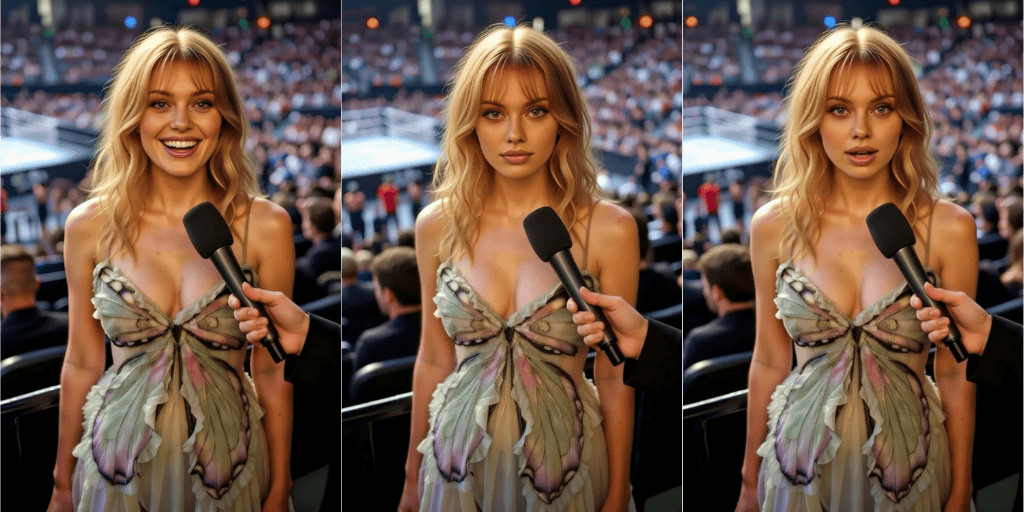
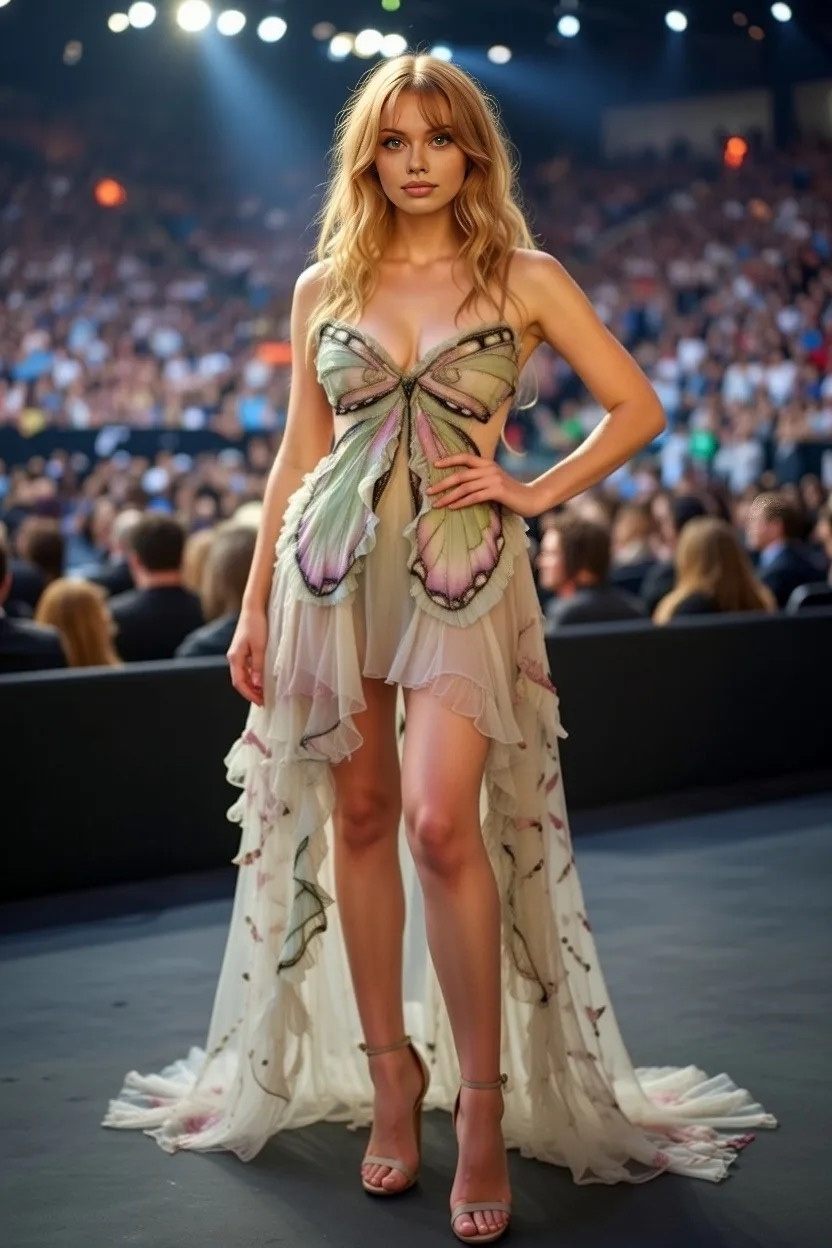 CHERYL STIXX IS STILL HERE — AND SHE’S NOT APOLOGIZING FOR IT The wrestler, pop-cultural lightning rod, and former showgirl talks about coming back, standing her ground, and becoming The Real Miss Cheryl. By Riana Betts Photography Alasdair McLellan i-D, Cover Story ⸻ Cheryl Stixx doesn’t flinch when she talks about the year she’s had. There’s no defensiveness, no manufactured redemption arc, no neat bow tied around the mess. Instead, there’s calm. There’s resolve. And there’s the unmistakable energy of someone who knows exactly why they’re still standing. “I didn’t come back because it was easy,” she says. “I came back because it felt right.” For many, Cheryl’s return was framed as a resurrection of the vicious showgirl — the headline-grabber, the spectacle, the girl who once blurred the line between celebrity and chaos. But the Cheryl sitting in front of me isn’t interested in recreating a past version of herself just to satisfy nostalgia. “Am I still that girl? Yeah, I could be,” she admits, half-smiling. “But I’ve become more than that.” This year, Cheryl found herself at the center of one of the most polarizing stories in the wrestling world. Her feud with Marisa wasn’t just about competition — it became a referendum on image, ambition, and what women are allowed to look like when they take up space. “People tried to turn it into something ugly,” Cheryl says. “But for me, it was simple. I was standing my ground. I was standing up for what I believe in.” She’s careful with her words, but firm. What happened wasn’t a breakdown. It wasn’t a mistake. It was a boundary. “I wasn’t being vicious for the sake of it,” she explains. “I was being honest. And honesty isn’t always pretty.” Cheryl is aware of the narratives that trail her — the think pieces about reinvention, the obsession with “eras,” the insistence that she’s somehow become unrecognizable. “People talk about me like I’ve been through a million transformations,” she says, laughing softly. “But honestly? I didn’t change that much. I was just a scared loudmouth before. And then I found strength in being the real me. That’s the only change.” That clarity extends to how she shows up for others. She pauses when Quartz’s name comes up, choosing her words with care. “Quartz is someone I genuinely respect,” she says. “As a leader, as a man, as a person. I cheer for him — loudly. He’s the kind of presence that reminds you this space can still be about integrity, not just optics.” And then there’s Marisa — a chapter Cheryl refuses to flatten for public comfort. “Yeah, I stood up for her once. And I’d do it again,” she says, without hesitation. “Because what’s wrong is wrong, regardless of who it’s aimed at. There doesn’t need to be a ‘perfect victim’ for us to act. Marisa was treated unfairly in that moment, and I stood up for her.” She doesn’t rush to soften the point. “That never meant I was okay with her ways, or the things she stands for,” she adds. “That’s a whole other conversation — and one we’re allowed to have.” She smiles, already anticipating the discourse. “But naysayers gonna naysay,” she shrugs. “Right?” That honesty extends to her relationship with fame — something she’s navigated in more forms than most. Reality TV, music, wrestling. Public scrutiny at every turn. “I know some people still put air quotes around everything I do,” she laughs. “Celebrity. Wrestler. Whatever. But here’s the truth: I am all of it. And I belong.” It’s that sense of belonging she’s fought hardest for since returning. Cheryl doesn’t pretend the landscape hasn’t changed. She knows the division is deeper, sharper, more competitive than ever. She welcomes it. “I knew coming back wouldn’t be easy,” she says. “But I don’t want easy. I want real.” That’s where The Real Miss Cheryl comes in — not a rebrand, but a reclamation. “It’s not the safest choice. It’s definitely not the easiest way out,” she says. “But it’s the one that feels true to me. And once my mind is set, I’m not backing down.” She speaks with gratitude — for the OCW Galaxy, for the women’s division, for mentors and rivals alike. For people who trained her, challenged her, stood beside her. Even for the people who hurt her. “They all shaped me,” she says quietly. “And I’m thankful for that.” As for what’s next? Cheryl isn’t rushing to define it. There are whispers of new music. There’s unfinished business in the ring. There’s a sense that this chapter is still being written. “I’m not done,” she says. “I’ll keep grinding. I’ll keep getting better. I’ll keep showing up.” Then she looks straight into the lens. “I’m not going anywhere.” She smiles — soft, stubborn, unbreakable. “This is who I am now,” she says. “And I’m proud of her.” Stixx up!
 OCW Exclusive: “Trick, Treat & a Little Trouble” Halloween in OCW is always little extra — this year, it’s no exception! Fresh off a heated Turmoil that saw words fly and robes drop, Sex Metal Barbie Marisa and The Real Miss Cheryl decided to celebrate spooky season their own way: with a photoshoot that’s part runway fantasy, part Halloween chaos, and all attitude. Angels, devils, strawberries, and a whole lot of sugar and spice — the duo turned the charm (and the heat) all the way up for a shoot that’s already got people talking. Whether you call it confidence, controversy, or just really committed costuming, one thing’s for sure — these two know how to make Halloween unforgettable and FUN! And somewhere out there, we’re sure Junko is definitely having a few thoughts about it… but for now, the only judgment that matters is from the fans. Catch the full gallery exclusively on OCWfed.com.
 Cheryl Stixx changed their profile photo

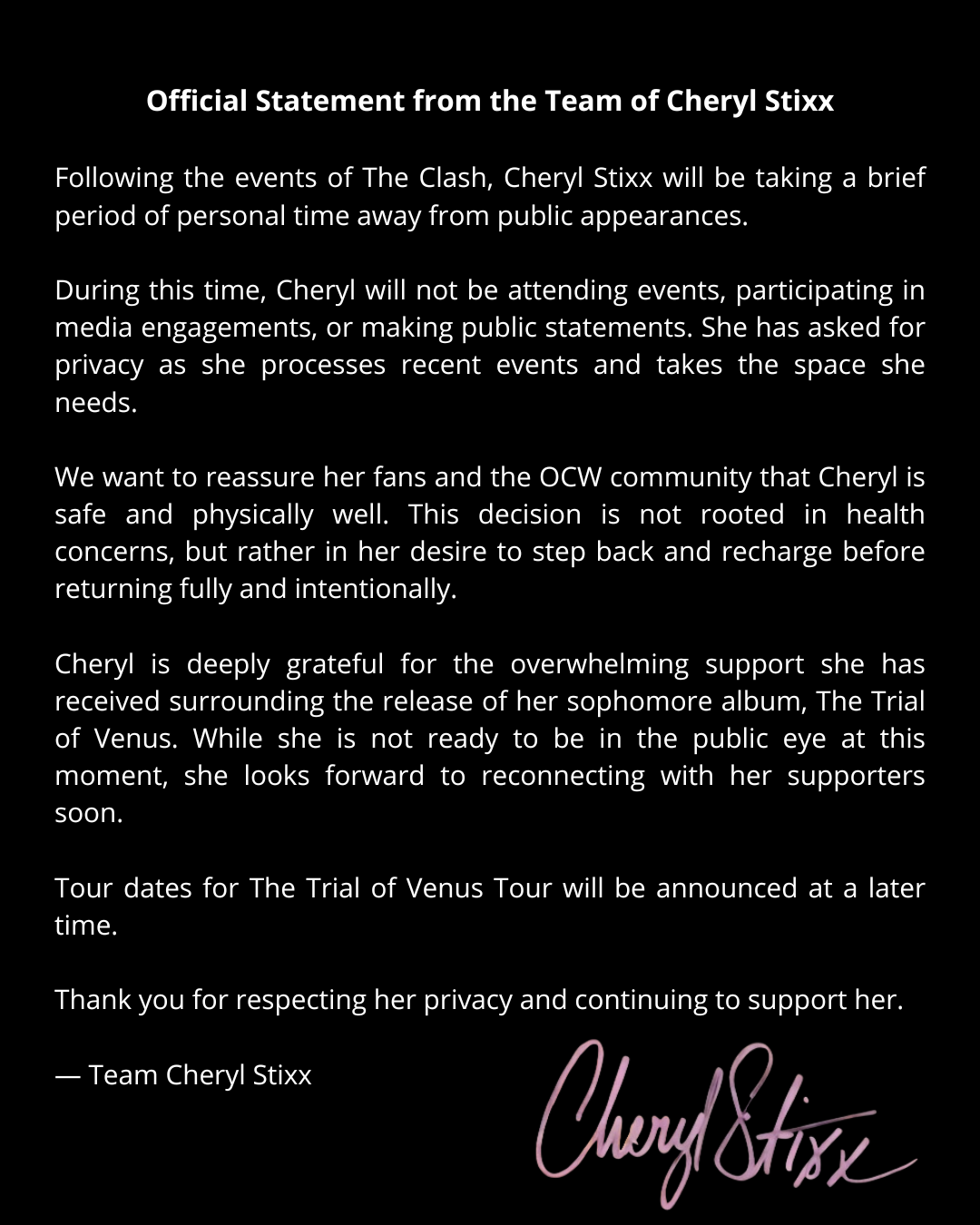







Account
Navigation
Configure browser push notifications
Chrome (Android)
- Tap the lock icon next to the address bar.
- Tap Permissions → Notifications.
- Adjust your preference.
Chrome (Desktop)
- Click the padlock icon in the address bar.
- Select Site settings.
- Find Notifications and adjust your preference.
Safari (iOS 16.4+)
- Ensure the site is installed via Add to Home Screen.
- Open Settings App → Notifications.
- Find your app name and adjust your preference.
Safari (macOS)
- Go to Safari → Preferences.
- Click the Websites tab.
- Select Notifications in the sidebar.
- Find this website and adjust your preference.
Edge (Android)
- Tap the lock icon next to the address bar.
- Tap Permissions.
- Find Notifications and adjust your preference.
Edge (Desktop)
- Click the padlock icon in the address bar.
- Click Permissions for this site.
- Find Notifications and adjust your preference.
Firefox (Android)
- Go to Settings → Site permissions.
- Tap Notifications.
- Find this site in the list and adjust your preference.
Firefox (Desktop)
- Open Firefox Settings.
- Search for Notifications.
- Find this site in the list and adjust your preference.